
Entities belonging to the Burman family, the promoter of Dabur India, on Monday announced a Rs 2,116 crore open offer to shareholders of Religare Enterprises Ltd (REL) to acquire up to an additional 26 per cent stake in the company as part of its strategy to enter the financial services space. Post the open offer, the family's stake in the financial services firm is expected to increase to 51 per cent. The open offer is made to increase the family's stake and take control of REL and this will mark the entry of Burmans into the financial services space.

The merger of ZEE Entertainment and Sony has reached an advanced stage of completion, and the issues faced by promoters with Sebi should not become a problem for the company, debarred ZEEL MD Punit Goenka has said in a letter to employees, according to sources. Goenka, who along with his father Subhas Chandra, was denied any interim relief against a Sebi order that barred them from holding the position of director or key managerial post in any listed company, in the letter ZEE Entertainment Enterprises Ltd (ZEEL) staff asserted that the merger of Culver Max (earlier known as Sony Pictures Networks India) is at a very important juncture. With the Securities Appellate Tribunal (SAT) restricting him from holding a directorial or key managerial position in a listed company, Goenka told the employees that the ZEEL board has constituted an interim committee of senior executives to ensure smooth operations and day-to-day functioning.
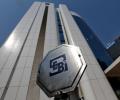
Capital markets regulator Sebi has imposed a penalty of Rs 10 lakh on Jayant Bhusare, who was one of the executive of Sampark Infotainment, in a case pertaining to the irregularities in the NSE's 'Dark Fibre' case. He has been directed to pay the fine within 45 days, the Securities and Exchange Board of India (Sebi) said in its order. On Tuesday, the regulator had levied a fine totaling Rs 44 crore on 18 entities, including NSE, Sampark, certain brokers and their respective past and present employees in the same matter.

Micro-cap stocks are in the line of fire as market regulator Securities and Exchange Board of India (Sebi) is tightening its noose around investment in small-cap stocks. Given this, analysts suggest investors exit the segment, at least, for the time being. Independent market analyst, Ambareesh Baliga, for instance, said that regulators have gotten worried on the valuation front, though belated, which could prove to be the last straw on the camel's back.

'We expect the bull-market phase to still persist, but now led by large-caps which offer better valuation and benefit from FII inflows.'
'We expect continued pressure on midcaps, but any sharp correction looks unlikely from here on.'
The rumour verification process would now be triggered by changes in price or 'material price movements', as the paper defines it. What this means is that companies would need to verify rumours only if the share price moves significantly.

Madhabi Puri Buch, the first female chairperson of Sebi, doesn't plan to rest on her laurels in her third and final year in office and has set out an ambitious goal, such as moving towards a same-day and instantaneous settlement cycle for the secondary market.

In an effort to attract investors to the Social Stock Exchange (SSE), the bourses have reached out to the Securities and Exchange Board of India (Sebi) and the government with the industry's demand for additional benefits on contributions made towards social enterprises through the platform. SSE is a regulated platform to facilitate organisations working towards social causes to raise funds and have access to higher capital through the bourses. The platform is aimed at becoming a meeting ground for donors and social enterprises.

Shrinking inflows and surging outflows on account of profit-booking has curtailed mutual fund (MF) investments in equities since April. The total investments made by equity MFs during the first three months of 2023-24 stands at just Rs 2,980 crore, compared with an average monthly investment of Rs 14,500 crore in 2022-23, reveals data from the Securities and Exchange Board of India. "We are seeing signs of moderation in non-systematic investment plan (SIP) contribution, which has impacted domestic fund inflows in recent months to some extent," says Kunal Vora, head-India equity research, BNP Paribas.

The auction follows aggregate overseas investments in government debt securities yesterday reaching Rs 1,21,271 crore (Rs 1,212.71 billion), which is 97.46 per cent of total permitted limit of Rs 1,24,432 crore (Rs 1,244.32 billion).

Investors may have to wait a little longer for Unified Payments Interface (UPI)-based block mechanism in the secondary market even as the market regulator has set the effective launch date as January 1, 2024. Several brokerage firms said they may take a few months more to implement it. Investors will be able to register for this facility only if the stock broker has opted for the UPI block facility.

The Securities and Exchange Board of India (Sebi) on Tuesday imposed a penalty of Rs 26 crore on Coffee Day Enterprises (CDEL) for alleged violation of securities laws. The regulator also directed the company to initiate steps to recover dues of Rs 3,535 crore-the amount diverted from seven subsidiaries of CDEL to Mysore Amalgamated Coffee Estates (MACEL). Affirming the violations of the Sebi (Prevention of Fraudulent and Unfair Trade Practices) Regulations and Sebi (Listing Obligations and Disclosure Requirements) Regulations, whole-time member Ashwani Bhatia said the listed company was being run like a personal fiefdom with no checks and balances in place.
Zee Entertainment Enterprises Ltd on Wednesday said Culver Max Entertainment, formerly known as Sony Pictures Networks India, has agreed to discuss extending the date required to make their merger scheme effective, a day ahead of the deadline. A day after Sony Pictures Networks India (SPNI) stated that it has not yet agreed to a deadline extension requested by Zee Entertainment Enterprises Ltd (ZEEL) for their proposed $10-billion merger, the Subhash Chandra family-promoted media firm said it has received a communication from Sony group for discussing an extension of the deal which was announced almost two years ago.

Private equity major Carlyle group on Friday sold shares worth over Rs 4,800 crore in SBI Cards and Payment Services and its nominee stepped down from the company's board. CA Rover Holdings (CARH), a subsidiary of Carlyle group, offloaded more than 4.7 crore shares of SBI Cards and Payment Services Ltd (SBI Card) worth about Rs 4,811 crore through open market transactions on BSE and NSE. With the latest sale of shares, the group's shareholding in the company fell below 10 per cent, following which its nominee director on SBI Card's board -- Sunil Kaul -- stepped down.
The Securities and Exchange Board of India (Sebi) is mulling changes to the 'fit & proper' criteria for market infrastructure institutions (MIIs), such as stock exchanges, in a bid to segregate the role of an individual from the entity, said sources. Under the current framework, wrongdoing by senior personnel could lead to a debarment of the MIIs such as stock exchanges, depository participants and clearing members-with quite a few such instances in the past. Additionally, Sebi is also mulling to introduce a clause through which any order passed against an MII will not affect their operations, unless it is specifically mentioned so in the order.

Strong performance of past IPOs spurred investors' interest, with 87 small and medium enterprises (SMEs) garnering Rs 1,460 crore through initial share-sales in the first nine months of the year. This was way higher than 56 companies that had raised Rs 783 crore through initial public offering (IPO) in the entire 2021, the industry data showed. Further, the remaining part of the year 2022 can see more mature companies accessing the platform.
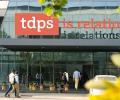
A new regulation concerning the disclosure of family arrangements by listed companies is exacerbating rifts between feuding shareholders. The latest example is Bengaluru-based TD Power Systems (TDPS), currently enmeshed in a legal dispute before the Karnataka high court over ownership of its 16 per cent equity. Vijay Kirloskar, who is asserting a claim over the 16 per cent stake held by Mohib Khericha (chairperson of TDPS) and Nikhil Kumar (managing director of TDPS and nephew of Kirloskar), has sent a letter to the market regulator, Securities and Exchange Board of India (Sebi), and stock exchanges. He accuses TDPS of insufficient disclosure concerning shareholder agreements.
IndusInd Bank was the top loser in the Sensex pack, shedding around 5 per cent, followed by Kotak Bank, HUL, Titan, Bajaj Finserv and HDFC. NSE Nifty plunged 263.20 points to 16,985.20.

Equity benchmarks bounced back sharply on Friday after facing a heavy drubbing in the previous trade, with the Sensex and Nifty jumping nearly 3 per cent, aided by positive trends from global markets and across-the-board buying. Index majors Reliance Industries and HDFC twins saw robust buying, helping the benchmarks. The 30-share BSE Sensex rallied 1,534.16 points or 2.91 per cent to settle at 54,326.39.

Equity indices ended higher for the second straight session on Tuesday, with the Nifty rallying over 1 per cent, helped by across-the-board buying and recovery in the US and Asian markets. Foreign fund inflows also added to the momentum. The 30-share BSE Sensex climbed 578.51 points or 0.98 per cent to settle at 59,719.74.

>It's not easy to predict the market. But there are at least two positive factors to back the PSU banks, explains Tamal Bandyopadhyay.

'You may put hundreds of checks and balances but human beings are ingenious.'

Stock exchanges NSE and BSE have freezed shares of promoters of Baba Ramdev-led Patanjali group firm Patanjali Foods, but the company said the decision will not have any impact on its functioning. Patanjali Foods Ltd, erstwhile Ruchi Soya Industries, on Thursday said the freezing of its promoters' shareholding in the company "will not have any impact" on its financial position and functioning of the company. On Thursday, Patanjali Foods Ltd (PFL) informed that leading bourses BSE and NSE had frozen shares of its 21 promoter entities, including Patanjali Ayurved for failing to meet minimum public shareholding norms.

Foreign portfolio investors (FPIs) are likely to get a reprieve from the Securities and Exchange Board of India (Sebi) in case of a passive or unintended breach of the thresholds that trigger additional disclosure norms. According to sources, FPIs whose single group exposure exceeds 50 per cent of their corpus will get 10 trading days to bring down their exposure below the prescribed level, without triggering the stricter disclosure norms. If total equity exposure of an overseas fund exceeds Rs 25,000 crore and it doesn't wish to provide additional disclosures, it will have three months to pare its exposure.

The domestic equity market, which is on a record-breaking spree, will focus on macroeconomic data announcements, movement in global stocks and the US Fed minutes to get further direction, analysts said. Trading activity of Foreign Institutional Investors (FIIs) will also innfluence investors.From the domestic macroeconomic front, Purchasing Managers' Index (PMI) data for the manufacturing sector will be released on Monday, and that o,f the services sector on Wednesday. Investors, this week, will keenly watch major global market events, icluding the outcome of the Federal Open Market Committee (FOMC) minutes, scheduled to be out on Wednesday.
Three companies -- FirstMeridian Business Services Ltd, IRM Energy Ltd and Lohia Corp -- have received capital markets regulator Sebi's go-ahead to raise funds through initial public offerings (IPOs). These firms, which filed their preliminary IPO papers with the markets regulator between September 2022 and January 2023, obtained the observation letters during February 21-24, an update with the Securities and Exchange Board of India (Sebi) showed on Tuesday. In Sebi parlance, observation implies go-ahead to the company to float the initial share-sale.
ITC was the top loser in the Sensex pack, tumbling over 5 per cent, followed by ICICI Bank, Kotak Bank, Axis Bank, SBI and HDFC Bank. NSE Nifty sinks 354 points to 17,857.25.

China and India, the 'twin engines' of Asian economic growth, have decided to step up their cooperation in the stock exchange sector for the first time with both sides inking an agreement to this effect.

Equity benchmark Sensex on Monday crashed about 1,546 points to sink below the 58,000-level due to across-the-board selloff tracking sluggish global markets. Besides, persistent foreign capital outflows continued to affect the market sentiment, traders said. Benchmark indices started the session on a weaker note and the selling intensified during afternoon trade, with almost all sectoral indices ending in the red. The 30-share BSE Sensex ended 1,545.67 points or 2.62 per cent lower at 57,491.51.
Maruti was the top gainer in the Sensex pack, rallying over 5 per cent, followed by L&T, UltraTech Cement, TCS and Titan. NSE Nifty rose 26.25 points to 15,772.75.

The broking industry's pecking order is set to change with Groww, a fin-tech startup from Bengaluru, poised to topple the industry's poster boy, Zerodha, as the leading brokerage in the number of active investors. According to data provided by the portal Topsharebrokers.com, Zerodha has 6.32 million active investors, while Groww is at 5.99 million. It is projected that Groww, which has grown at a much faster clip over the past two years, will surpass Zerodha this month, or next month.

'The stockbroker should have a good balance sheet to support its scale of operations. It should also have proper risk management in terms of margins so that it doesn't go bankrupt during extreme market movements.' 'The broker must have a track record of navigating several market cycles in an ethical and transparent manner.'
The National Stock Exchange has launched a volatility index reflecting the market's expectation of volatility over the near term, which is the next 30 day period. From the best bid-ask price of Nifty 50 Options contracts, a volatility figure (percentage) is calculated, which indicates the expected market volatility over the next 30 days. Higher the implied volatility, higher the India VIX. Implied volatility refers to the implied risks associated with the stock markets.

Crisil's experience is that these reports improve volumes for the companies covered.

M&M was the top loser in the Sensex pack, shedding around 4 per cent, followed by SBI, ICICI Bank, Axis Bank, IndusInd Bank, ITC and NTPC. NSE Nifty declined 265.35 points to 14,549.40.

Equity indices faced a heavy drubbing on Thursday after an initial rally, with Sensex tanking 1,045.60 points amid a largely bearish trend overseas after the US Federal Reserve hiked rates by 75 basis points.

IndusInd Bank was the top loser in the Sensex pack, tanking over 8 per cent, followed by Bajaj Finance, SBI, ONGC, Titan, M&M, Bajaj Finserv, ICICI Bank and Axis Bank. NSE Nifty plunged 524.05 points to finish at 14,310.80.

Dr Reddy's, Maruti, Bharti Airtel, Bajaj Auto, Infosys, TCS and Bajaj FinServ were the major losers. On the other hand, IndusInd Bank, Sun Pharma, ICICI Bank and HDFC Bank ended with gains.

From the enactment of the capital control Act to the recognition of the BSE as a stock exchange and the infamous Harshad Mehta scam, here are the 18 biggest events for stock markets from 1947 to 1993.
